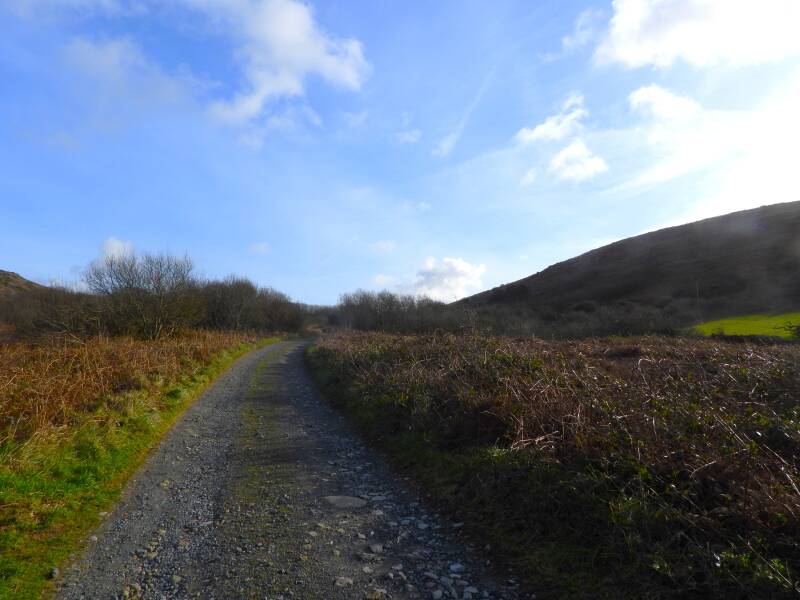
Places to see birds in the St Ives area
Welcome to the definitive guide to bird watching locations around St Ives. The place to figure out where to go, when to go and what you think you should be seeing .. and maybe, invent what you have seen so that you drive us all mad with jealousy ...
The St Ives area is varied - with headlands that seabirds pass in decent winds to well-vegetated valleys that attract migrants. As with most of Cornwall it's migration that matters. Sticking out into the Atlantic ocean as it does, at migration time in Spring and Autumn anything can turn up ... or nothing at all. Seabirds are the main attraction most of the year. Auks, Gannets, Kittiwakes - are pretty much all year - building up to peak seabird action between late July-ish and early October-ish when rarer shearwaters, skuas and petrels pass west as they head towards the exit of UK waters. However, we have seen decent seabirds pretty much throughout the year when there is the "right" westerly wind with a bit of north in it.
Below you'll see the map that defines the "St Ives 15K" which is around 15 km squared near as dammit, and covers the areas we like to spend time in. From St Ives Island in the North East, heading West via Clodgy Point and Treveal valley to Zennor Head. From Zennor up the Foage Valley to Foage Farm in the South West and across east to Buttermilk Hill and on to Carbis Bay via Trencrom. All of these places have had good birds at one time or another and that's without really trying. Creating this map made us realise that even we haven't fully explored all of these habitats properly - which is something we're committed to rectifying.
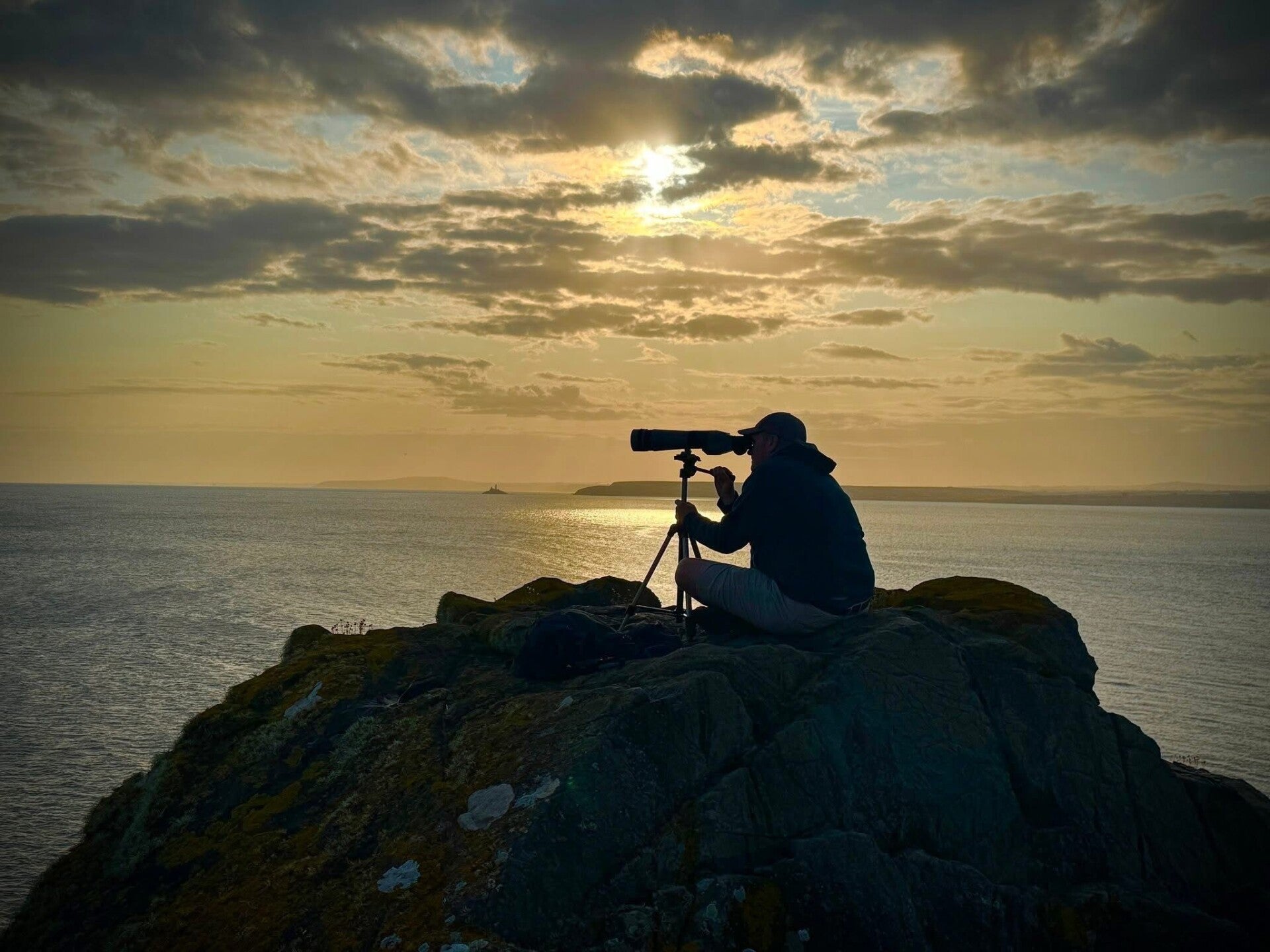
"The Island" at St Ives
We're going to try and get through this whole article without mentioning the Great Day back in the 1980's... when the wind and meteorological conditions all conspired to create one of the greatest sea-watching days ever. We're a bit tired of hearing about that day - and "St Ives is no good in anything other than a North West gale" - and, anyway, we've seen everything that was seen back then ... and more! So, we're not going to mention it ever again ... so please don't ....
The Island at St Ives is not actually an island, ie surrounded by water. Many years ago it was - with a hermit living on it - but those days are long gone. Back in the 1800's sometime, the gap between the Island and St Ives was filled in with sand by a storm and then by some clever engineering for its day, they then built upon that sand to create a permanent link.
The best time of year for seabords is traditionally late summer but we have proven that The Island really does produce good birds any time between July through to November as long as the wind has some West in it. However, let's be honest, the best time for seabirds is in a North West blow, especially if that North West has switched quickly overnight from a South West blow. The SW wind moves the birds into the Celtic Sea - the NW then ensures the birds get pushed into St Ives Bay and have to struggle past The Island to get out.
At peak passage season we get Wilson's, Leach's, Sabine's, all the Skuas including Long-tailed, as well as plenty of Cory's and a few Great Shearwaters. St Ives has also produced South Polar Skua and Black-browed Albatross and we had a Brown Booby in the bay for a couple of weeks - all in the last 5 years. The Island doesn't get the numbers of birds that Pendeen does, which is around 10km west of here, but we do get them passing MUCH closer.
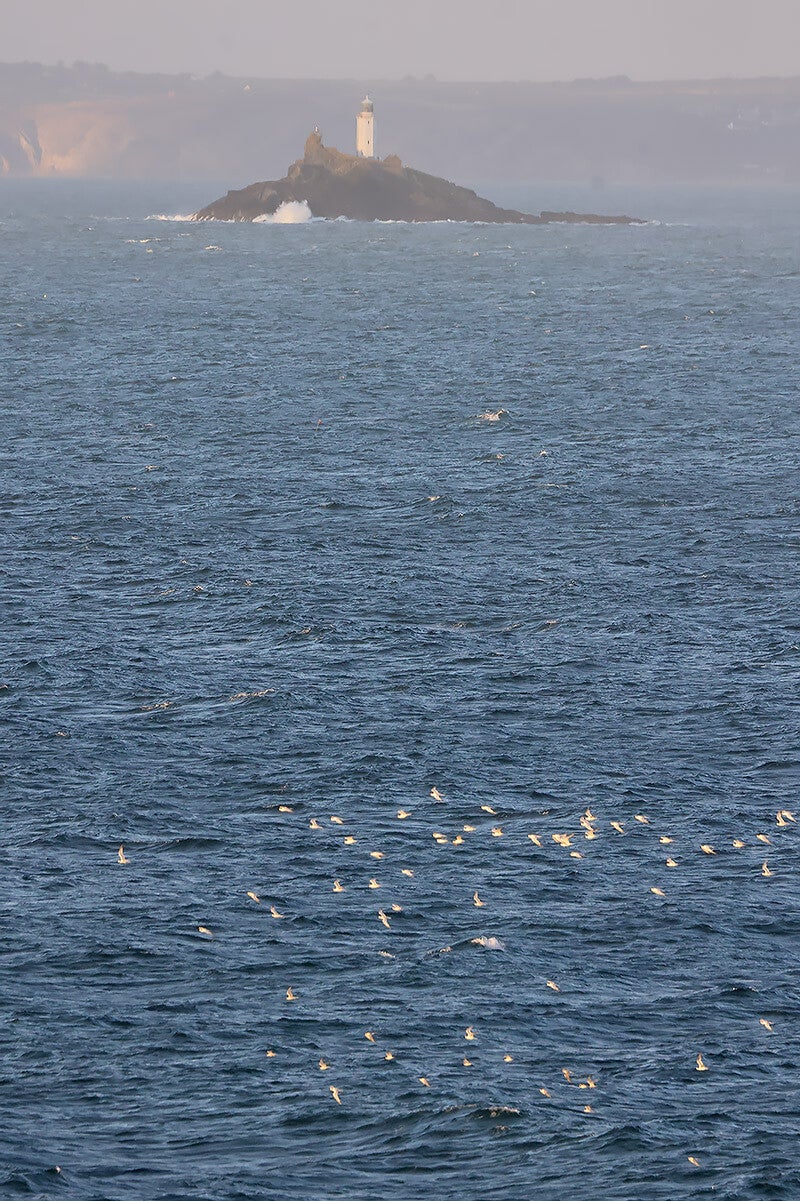
Clodgy Point Coastal Path & Burthallen Lane
Clodgy Point is the next headland along from Man Head which is the one along from The Island. A walk out to Clodgy has delivered migrant birds like Wryneck, Whinchat and others - its an area that really should be watched more in spring and autumn... which is exactly what we'll be doing in 2026. Walk inland and it takes you through the Burthallen Loop - through a mix of scrub, farmland, fields and gardens. This promises much but we've not had time to really see what this area can produce. We have high hopes for Spring and Autumn. Our predictions for here include Tawny Pipit, Woodlark, Citrine Wagtail as well as more "common" species too.
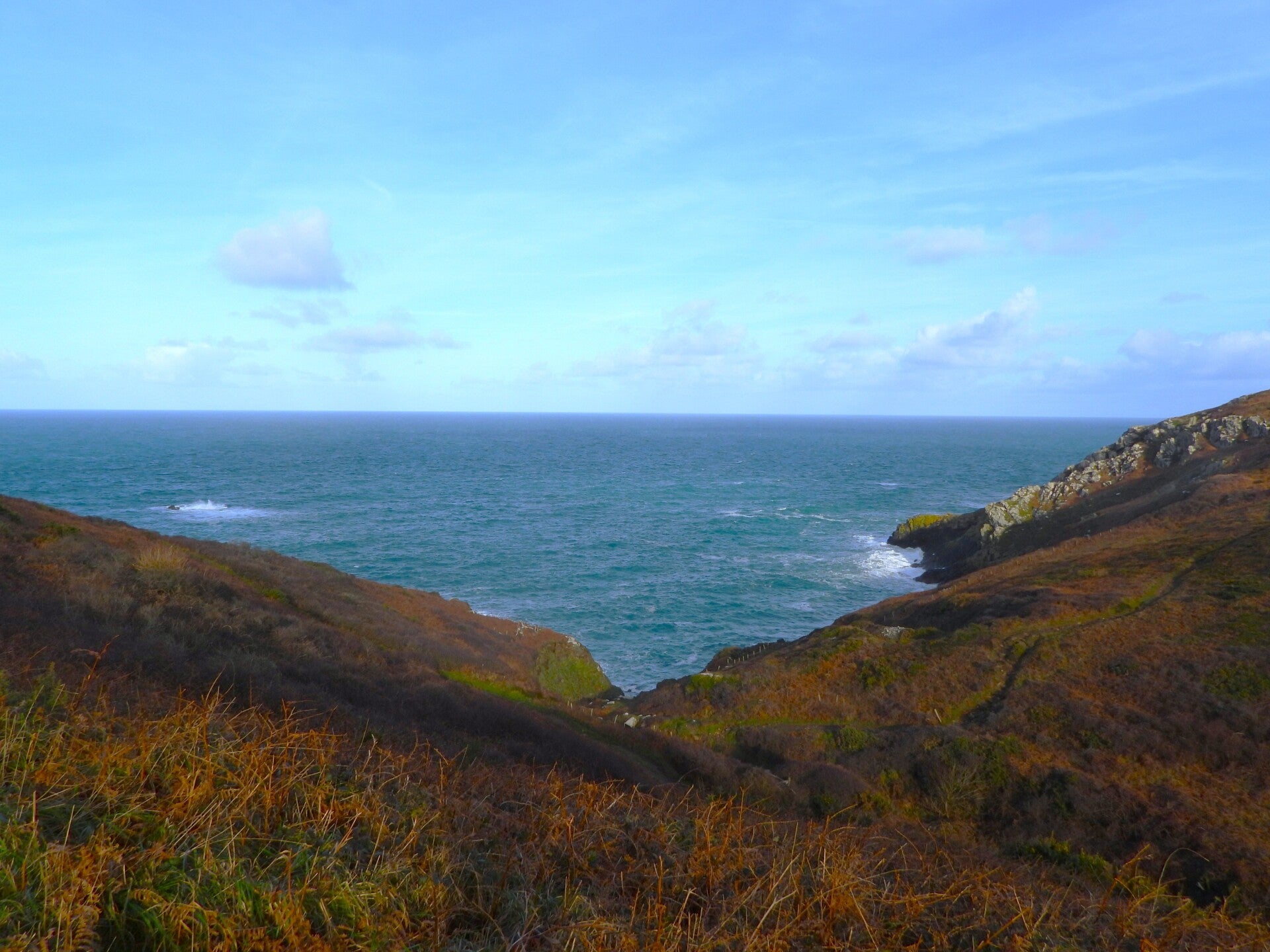
Buttermilk Hill & Treveal Valley
Buttermilk (Rosewall) Hill is one of the highest points in the St Ives area. Regular birds here include Ring Ouzels, Cuckoo, Wheatears. Irregular birds have included Little Swift and Crag Martin in the recent past. Treveal is a NT location just down from Buttermilk and has hosted Yellow-browed Warbler, Golden Oriole, Melodious Warbler amongst other such rarities. Needless to say none of us have actually seen many of these rarities and they were seen quite a long time ago. But that doesn't stop us trying and given that Treveal is a valley, it's in West Cornwall, and those 2 things alone are enough to send birders quiver with excitement in autumn, and to a lesser extent, in spring. Buttermilk is Cornish farm and heathland with Western and European Gorse. Treveal is farmland and then remnant "Atlantic rain forest". The habitat promises much, but is hard to "work" precisly because it has so much cover. Both these locations are walkable from St Ives but need a well planned day trip to do both well.
Zennor Head to Foage Valley
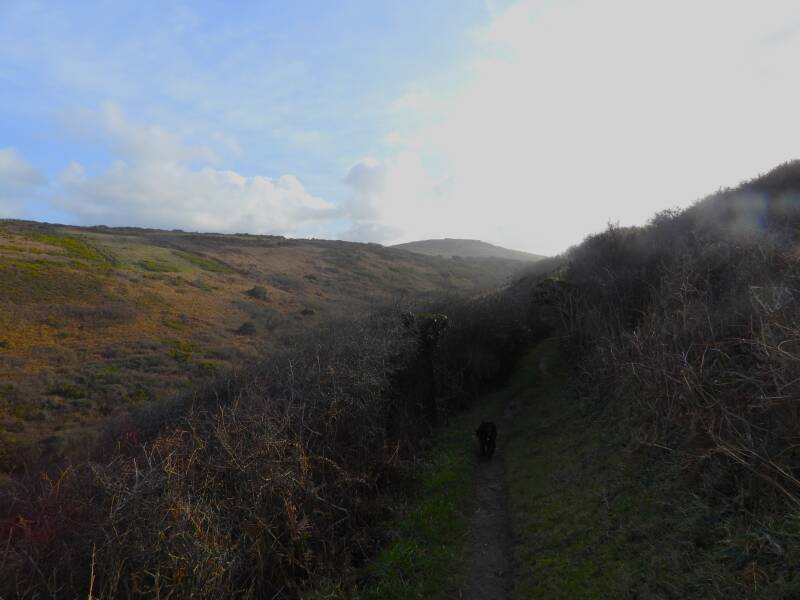
Zennor is the next village along from St Ives heading West. It, and the Foage Valley forms the western edge of our St Ives 15k patch and is the realm of James. Mysterious things happen this far West and we rely on James to make sense of it all. It's here that farmers find outlandishly rare birds from their tractors and where "one-day" birds are the norm. James has written a quick introduction to Zennor and Foage here. Again, it's a headland, it's a well-vegetated valley, it's in West Cornwall - what's not to like and get excited about!